
Yohance Lacour
Like most of Chicago in the 90s, Yohance Lacour spent his teen years trying to find the most elusive gym shoes no one else had, going with his friends to “really obscure hole-in-walls, back-alley stores, that had that one or two pairs of shoes that we knew about.”
“We set that standard back in the day, back then it was about exclusivity — you had to go through hell and high water to get those,” he said.
Lacour was born in the Hyde Park neighborhood on Chicago’s South Side. His father was a college professor and his mother was an elementary school teacher. Lacour says that growing up on the South Side “grounded me in the Black American experience.”
“I could escape a lot of the perils that the South Side presented if I chose to,” he said. “But I was an outgoing kid and a curious kid, and I had family, close family members on the South side.”
He immersed himself in Chicago gym shoe culture, starting his first businesses shoveling snow, raking leaves, and walking dogs to save enough money to buy a pair of Air Jordans as a child.
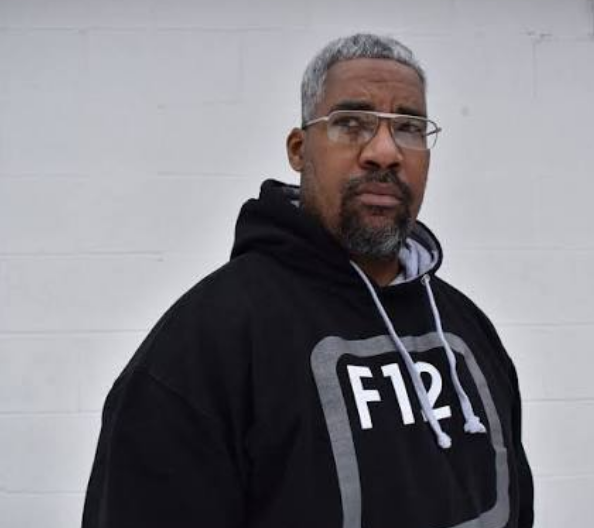
Throughout the 80s, Lacour spent his summers in Harlem visiting his uncle who worked as a civil rights attorney, an experience he said informed his spirit of “entrepreneurialism and resistance.” Here, he was introduced to Hip Hop. He said he was inspired by the themes of how “Black and Brown youth living in poverty were able to embrace struggle, while simultaneously aspiring to enjoy luxuries afforded exclusively to the other side of the class spectrum.”
As a child, Lacour wrote in many mediums. He created comic books and wrote poetry which then evolved to writing raps once he became a teenager. He also wrote for a friend’s magazine in his free time.
He started smoking weed in 8th grade with his friends and became the one to buy it for his group. Eventually, other people were asking him to buy weed for them. In return, they would pay for his own weed.
“Weed was like, not a drug to me,” Lacour said. “My father smoked weed and he was like I say, almost every man I've ever known, [it was] like a harmless thing.”
One of his friends made a large deal on weed from Texas, and he invested all of his savings into the deal. His friend was caught and arrested, and Lacour lost all his money. Motivated to make back his money, he started selling weed directly.
He continued selling weed through high school and college when he enrolled in University of Illinois Chicago as a journalism student.
In 1997, Lacour learned about the brutal beating of a young Black child by white assailants in the nearby white neighborhood of Bridgeport and was outraged. Lacour, who was then 23 and still in college, joined the South Street Journal, a small neighborhood newspaper, as a staff writer. He wrote several stories on 12-year-old Lenard Clark who was in a coma and received severe brain damage.
“He was so young, he was beaten so viciously in Bridgeport by young men, much older, much bigger, and it was close enough to my own home and where I came up in Hyde Park that I felt like I just had to do something about it, felt like it was happening on my watch,” Lacour said.
While most major outlets and Chicago officials pushed a narrative of racial reconciliation, Lacour highlighted the brutality of the event and ties connecting Clark’s attackers with the Chicago Italian mafia. He hoped that his reporting would awaken community outrage and protest, but to no avail.
“I felt like I gave up. I felt like this system of media and power and wealth and gangsterism in Chicago was too big for journalism to make a dent,” he said, which motivated him to quit journalism and drop out of college. “And so I'm like, okay, you know what? This shit don’t work. I’ll go back to the streets, I’ll get me some money, I'll figure out how to organize.”
He started making more money off selling weed, and he was able to move out of his parents house and buy a nicer car.
In 2002, he had a daughter with his girlfriend when he was 29. He jointly raised her with his girlfriend, however she mainly stayed with him while her mother worked an 8-5 job.
Lacour had been selling weed for about a decade without getting caught. His clients asked if he could supply harder drugs, and he agreed. He became a middleman, selling cocaine and heroin between suppliers. In 2007, he partnered with a friend who had contacts with “some pretty, pretty powerful guys in the street,” and expanded the business to more clients. The pair supplied drugs for a seller in St. Louis, M.O. who then got caught by police.
Lacour was stopped by police while taking his then five-year-old daughter to school. He was questioned on the St. Louis deal, but because he refused to name others involved in the deal, he was released the same day.
A week later, police in Missouri were able to approve an official indictment, and Lacour was arrested at age 34. In 2008, he pleaded guilty to one count conspiracy to distribute one kilogram of heroin and was sentenced to 10 years in federal prison in Duluth, M.N.
“The hardest thing was being away from my daughter and having my relationship with her interrupted and derailed,” Lacour said. “I was with my daughter every day for five years. She was only five years old... She was my best friend.”
While in prison, Lacour made the decision to quit selling drugs.
“I often referred to [it] as the darkest part of time in my life,” he said. “But it was in that darkness that so much was illuminated for me. And it was in that darkness that I realized that I had another shot at life.”
Lacour was introduced to leatherworking through a hobby craft program at the prison. He learned new techniques through other inmates, taking inspiration from fashion magazines that circulated through the yard. He would study luxury bags and learn to recreate them by hand. He fell in love with the process, and became inspired to make his own designs.
“When I realized I was in love with it, I knew I wanted to do it when I came home,” he said. “I also knew that I didn’t want to come home and be hand making a knock-off. I don’t want to hand make an imitation, you know a replica of somebody else’s design.”
During his time in prison, Lacour refined his techniques, learning how to design and create his own leather handbags, accessories, and greeting cards.
Lacour was released early from prison in 2017 after eight years. His daughter, who was now in high school, was struggling academically. While she had visited him a couple times during his sentence, their relationship had dwindled. He decided to homeschool her, rebuilding their connection.
“I just had to stay the course and be determined in the face of her unwillingness and sometimes resentment,” he recalled. “I had to just kind of hold fast and understand, you know, that while she might have been having the wrong idea about me, it wasn't her fault.”
“But today, we're still not where we were when I left. But we're so much better than where we were when I came home,” he continued.
Lacour enrolled at the Chicago School of Shoemaking and Leather Arts to learn how to use a sewing machine and continue his leatherwork, eventually taking enough classes to qualify as an instructor. The school offered him an opportunity to teach a class on shoemaking, which he said reminded him of his childhood love for finding unique gym shoes. He took the opportunity “because of my background and love for sneakers, it was a no-brainer,” Lacour said. From that class, he began designing his own shoes, envisioning his own luxury shoe label.
“It almost organically fell in my lap; it wasn’t a plan at all. People started taking to the design when coming into the classes… The brand was born,” he said.
He first launched his brand in collaboration with the Chicago School of Shoemaking and Leather Arts under the name Motifs. In June of 2019, he decided to run the brand independently, and relaunched under the name Yohance Joseph Lacour.
“At first, I didn’t know the industry,” he said. “I was hand-making shoes and figuring it out. I took losses, wrong sizing and returns, but I cared. I learned.”
He sold a collection of shoes, bags, apparel, accessories, and leather greeting cards. His shoes used a “pretty unorthodox method of sneaker making” he said, combining “luxury high-end and exotic skins” with silhouettes from the gym shoes he collected as a teenager in Chicago.
While building his label, Lacour wanted to return to journalism. He reached out to local newspapers for open positions, but to no luck. His father referred him to Invisible Institute, a nonprofit production company that did investigative journalism work. Lacour talked to the company's founder about his background at the South Street Journal, and both expressed interest in creating a long form piece on Lenard Clark, the story that Lacour had reported on nearly 25 years earlier.
In 2020 through the pandemic, Lacour and his team conducted interviews with witnesses from the event, creating a podcast series chronicling the case and Lacour’s own experience reporting on it in 1997.
The seven-part series called “You Didn’t See Nothin” released in 2023. It won a Peabody Award that year and won a Pulitzer Prize for Audio Reporting the next year.
“The fact that I’ve found a platform as a Black writer to tell the story in its fullness speaks to how far we have come. I hope this podcast inspires my people to not only take back the mic and tell our own stories, but to follow them up with meaningful calls to action,” Lacour said.
Lacour hopes to continue telling Black stories through his leather arts business which he continues to expand. He calls his brand “political,” with each shoe having its own “story and social justice angle.”
“My handmade leather works tell stories of their own; of redemption, Black joy and pain. They speak not only to the Black experience as I've come to know it, but the future I hope to mold,” Lacour said.'
Written by Annie Ngo, Journalism 2026